Portugal, you have my attention: tasting rare native grapes, distinctive styles and 90+ point discoveries
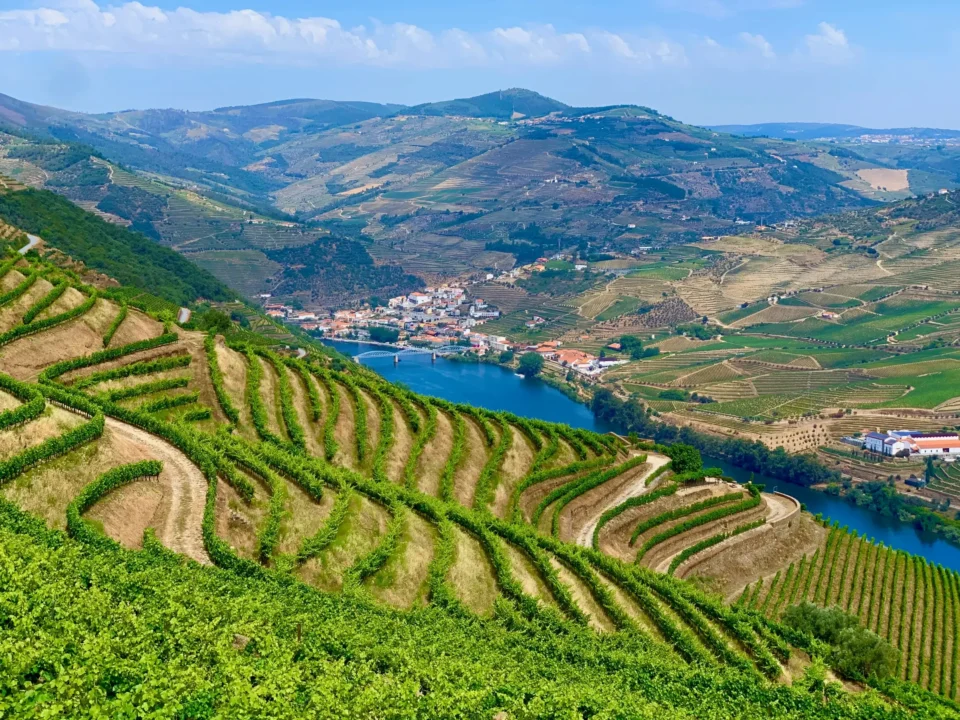
Trend-spotting story: Portugal is grabbing the spotlight for its wines. An eye-opening tasting showcased the range and quality the country offers wine lovers today.
I always try to taste wines when I am in London. The city is a mature wine market that attracts top growers and companies from every noteworthy wine region and country in the world. London also boasts a discerning wine media and an active on-trade sector that is actively seeking out unique, distinctive wines.
This time was no different: The Best of Portugal tasting on 3rd November of 250 wines put together by Tim Atkin MW and Beth Willard. All the producers present were showcasing wines that had scored a minimum of 93 points in Beth Willard’s Special Portugal report 2026.
I have been fascinated by the depth and variety Portugal offers in terms of its wine. I have always felt they are seriously underrated in terms of quality and general consumer awareness, and this tasting proved I was right. It was, to put it pithily, a humdinger of a tasting. Top producers showcased a variety of sparkling, still, fortified wines – covering several of the 250 rare native grapes and diverse appellations that Portugal boasts of. To get a clearer view of Portugal as a wine country, visit Wines Of Portugal.
The numbers were significant enough: 672 wines by 91 producers were assessed, of which a whopping 302 scored at least 93 points – that is almost 50% – and speaks to the quality of Portuguese wine. On the day, I believe there were around 250 of these, accompanied by their winemakers and winery owners in many cases.
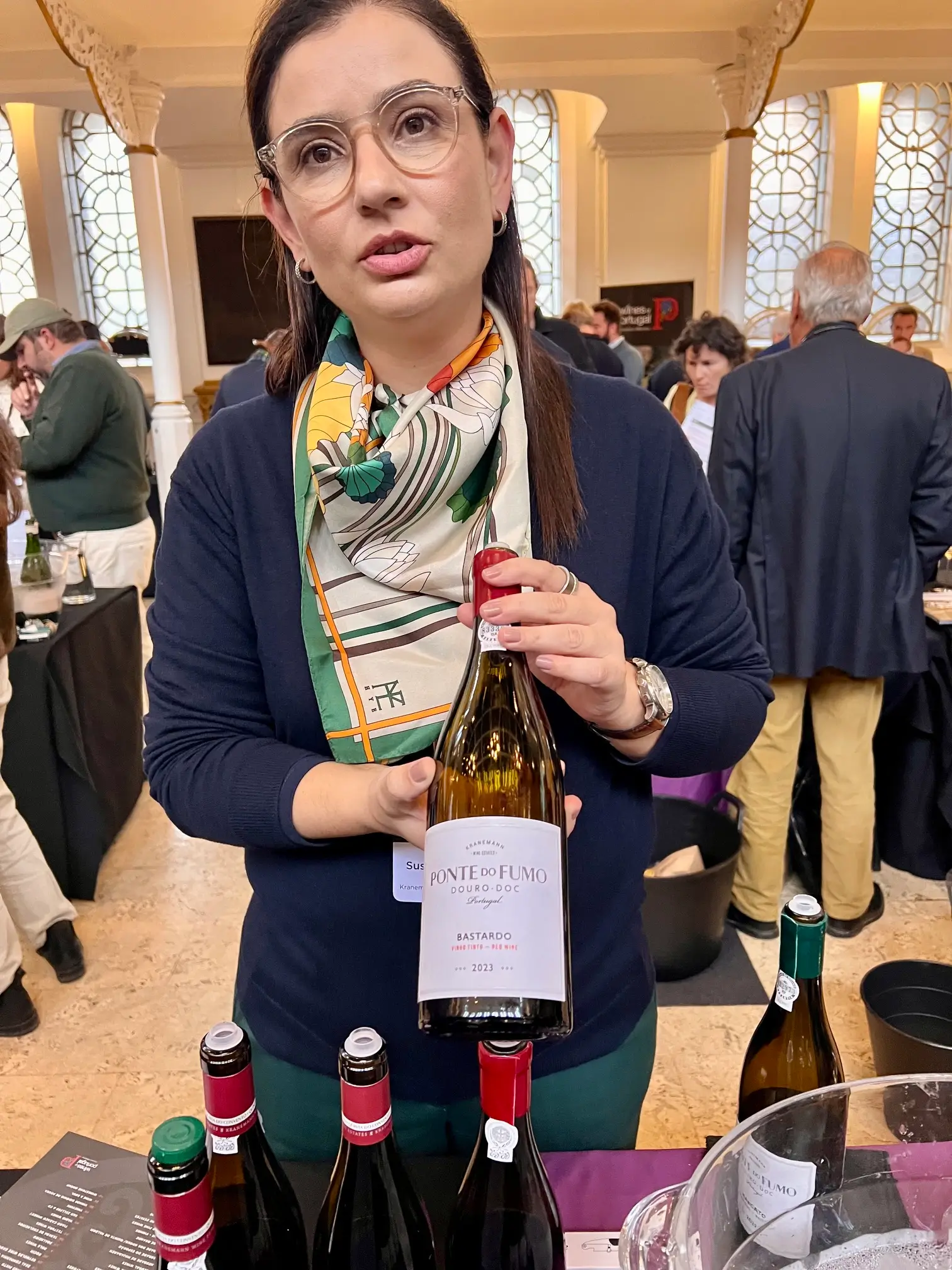
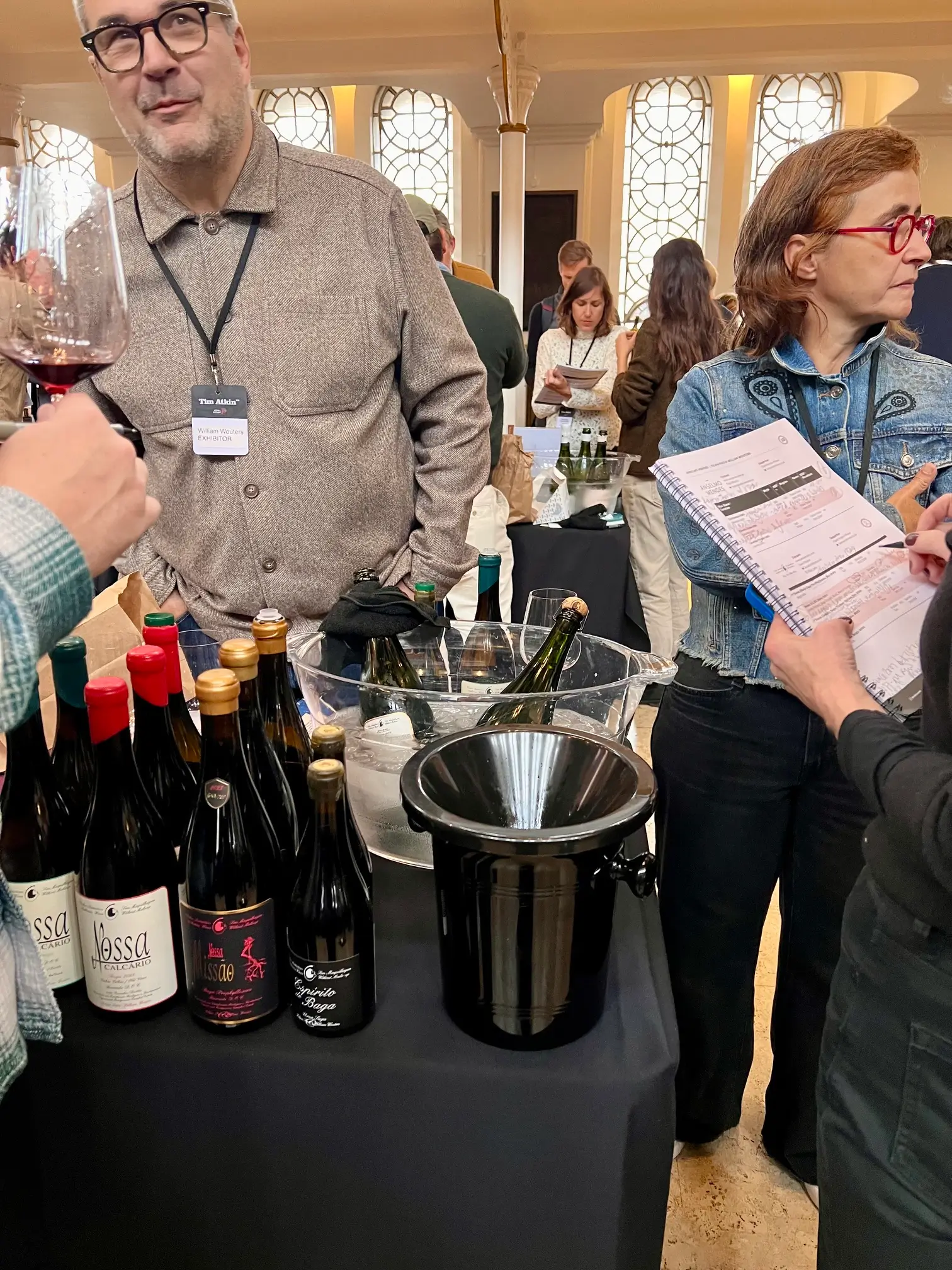
The elegant Ponte do Fumo Rabigato 2020, 100% Bastardo from Kranemann (left) The powerhouse team of William Wouters & Filipa Pato (right) showed some of the best wines of the day. Pato won the Grower of the Year.
So what does Portugal mean as a wine country so far?
- When it comes to indigenous varieties, Portugal is right up there with the best. From the racy, bright Alvarinho to Tinta Roriz in the Douro, a region historically famous for its fortified wine, port. Today, this image has changed and grown even more: Portuguese producers are celebrating native grapes and highlighting regional differences and terroir. I tasted some amazing whites made from native grapes: Encruzado, Bical, Rabigato, Loureiro, and Maria Gomes, among others. The reds, each so different from the other, included Trincadeira, Alicante Bouschet, Baga, Bastardo, Touriga nacional, and Jaen. The list goes on and on. Agreed, the names might be hard to remember, but once you taste them, you will be a fan. Guaranteed.
- There is a distinct move away from heavy new oak towards large-format old wood, concrete and even stainless steel. If oak is used, it is used to underline and amplify the grape’s characteristics. Terroir is allowed to sing. No more is Vinho Verde a spritzy, grassy, cheap white quaff. I tasted aged Alvarinho made from old vines that was outstanding, and Vinho Verde villages of Monção and Melgaço have developed a serious reputation for quality. Douro is being vinified with a lighter touch. Dao whites are becoming significant game-changers. Bairrada is finding its voice and harnessing the Atlantic Ocean’s influence to create memorable, age-worthy wines. Field blends, a historical style in Portugal, rule again. Talha, or traditional amphorae, are being used. You find more aromatic, lower alcohol wines, and finer tannins. Things are changing in the winery, and it’s for the better: more refined styles of wine at still-great prices abound.
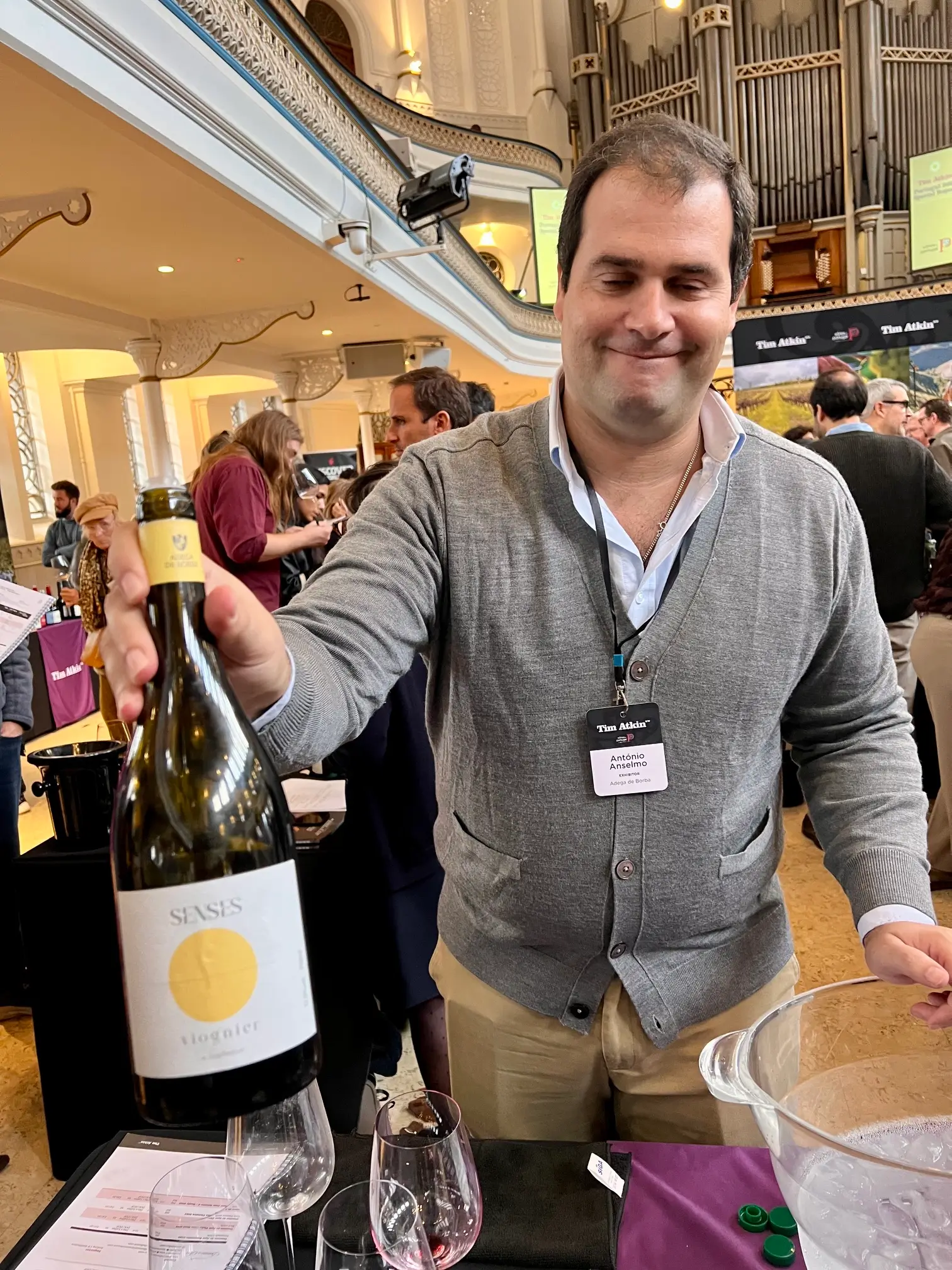
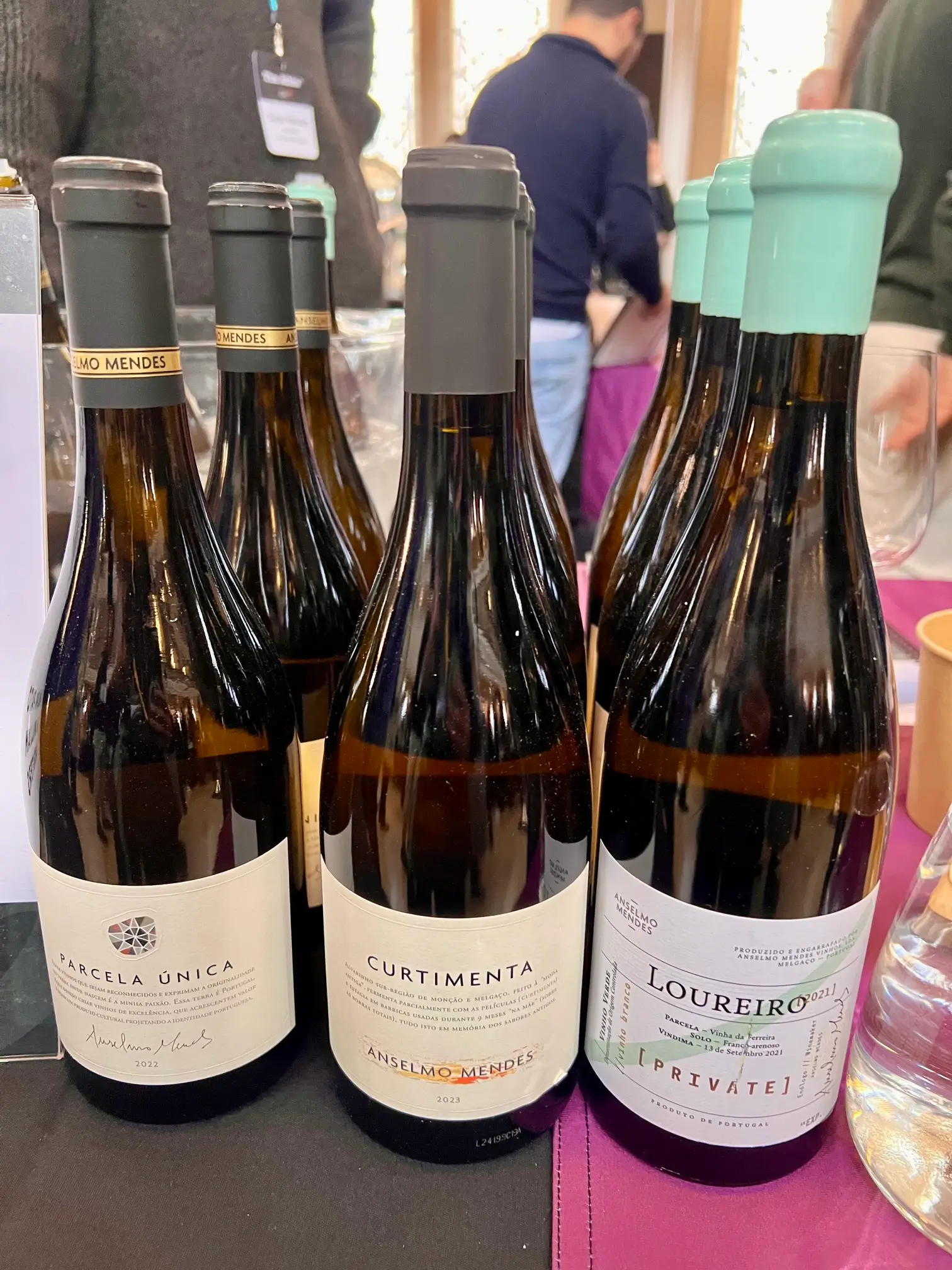
Adega de Borba’s Senses Viognier 2024 won best value wine (left). The wines from Alselmo Mendes included Alvarinho and Loureiro wines (right)
The takeaways
- Yes, Portugal is a winner in the affordable/approachable wine category still – it can deliver a great price/quality ratio across all price points. A case in point was Adega de Borba, a cooperative that scored 93 points and topped the affordable range with its – get this – Senses Viognier 2024. Medium-bodied, well-balanced, it gathered wide-ranging approval from all. But they do a complex, premium range too. The Havendo Tempo 2023: a white (Roupeiro, Rabo de Ovelha) blend from Alentejo that grabbed 95 points. The still red Havendo Tempo 2021, a Trincadeira + Alicante Bouschet blend, scored 94.
- South African winemaker Marc Kent (known for his popular South African star, Chocolate Block) continues to raise eyebrows with his Portuguese venture Companhia de Vinhos Invencível formed with his partner Rita Marques in 2020. I am a fan of his Invincible red from Douro, and the 2023 red vintage is already drawing appreciation (94 points). Equally fascinating is the Invincible white 2024 vintage (field blend of 10 different grapes from 90+ year old vineyards). How do they achieve 12.5% ABV in the Douro? North-facing slopes and thoughtful choices in the vineyard, I was told.
- Niepoort is family-owned and multi-generational and is famous for port, but this producer is doing wonderful things with still wine. I tasted the Batuta 2023 (97 points), a field blend of 100% old vines, 4 months on skins and aged on old wood for 1.5 years. The Redoma Tinto 2022, another old-vine field blend grown on shale and foot-trodden in stone lagares (94 points), was also amazing. But what actually floored me was the Charme 2024, a delicate, expressive Burgundian-esque blend from Tinta Amarela, Touriga Franca, Tinta Roriz, Touriga Nacional and Tinto Cão (96 points) from old vines that was almost Pinot-like in flavour and texture. The range and diversity of profiles were mind-boggling.
- Across the hall, icon Bairrada winemaker Luis Pato gave me a too-brief masterclass on the differences between Cercial (in his Vinha Formal Imperial 2019, blended with 70% Bical, 98 points and noted as the legendary high-acid white grape famous in Madeira), and the rare Sercialinho (100% in his Quinta do Ribeirinho Branco 2023 (97 points, believed to be a cross between Sercial and Alvarinho). Suffice to say the differences were marked in the glass, and both were outstanding.
- Just behind him, the high-profile duo of Filipa Pato, his daughter and a famous winemaker herself, with her husband and head of the ASI, William Wouters, offered pours of some stunners. But what got my attention was their traditional method sparkling Nossa SLRS Since 2001 (96 points), a solera blend started with Pato’s first vintage in 2001, of Arinto, Baga, Cercial, Bical and Maria Gomes. For me, this was the wine of the afternoon. Bairrada DOC bubbles are always arresting, but this one, named ‘anti-vintage’ by the duo, was a deep gold and had a depth of flavour (bruised apple, nuts, minerality and a very long finish). The estate is boutique, certified biodynamic, and Pato prides herself on producing wines without makeup – just simple and authentic.
- At the Kranemann Estates booth, I tasted the French oak-matured Ponte do Fumo Rabigato 2020 and the award-winning Ponte do Fumo Bastardo 2023 (both 95 points). Rabigato is a Douro white grape that does not get the love it deserves in the face of the famous Douro red grapes. Both were very distinctive, very memorable.
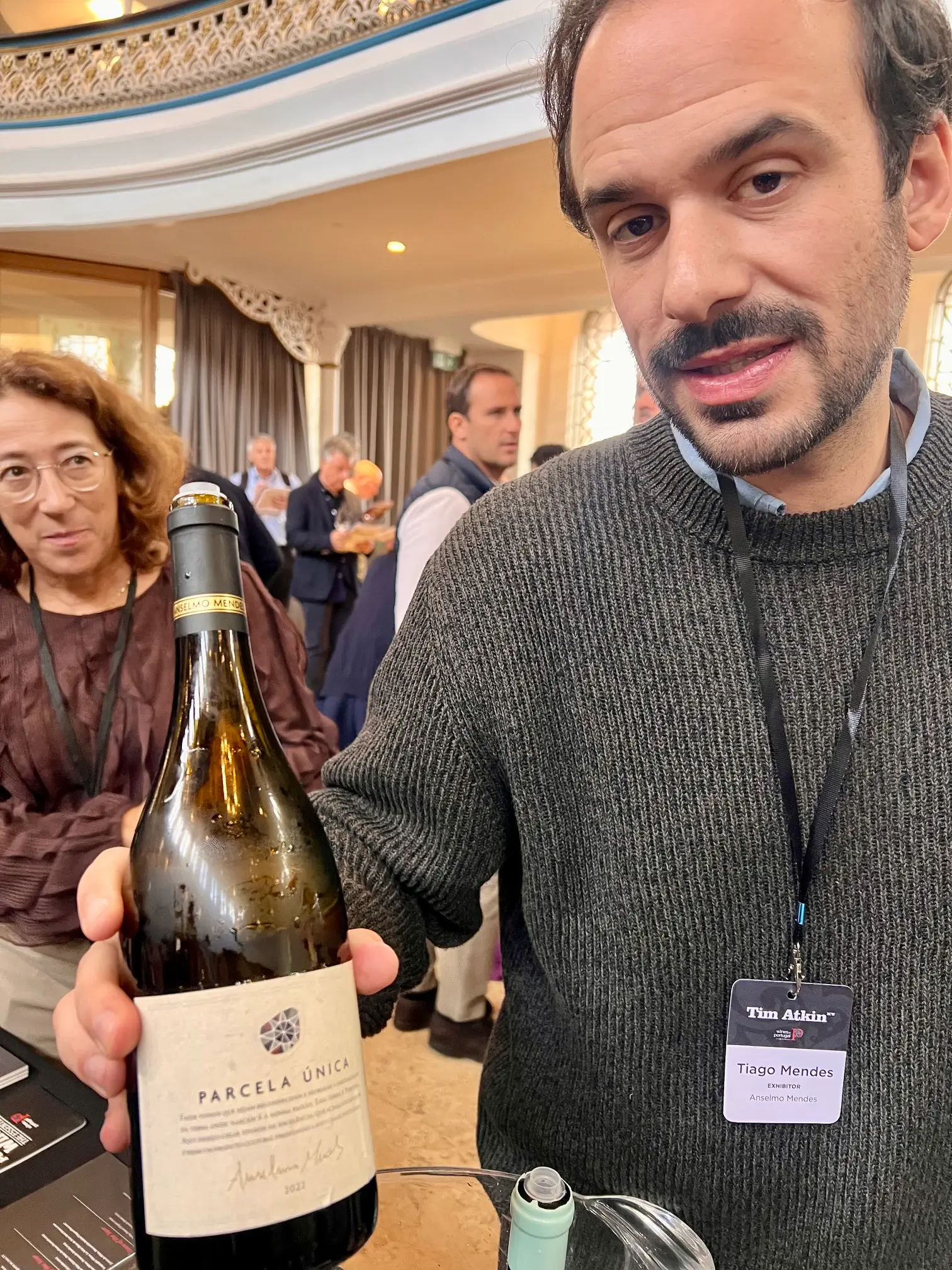

The stunning 100% Alvarinho Parcela Unica 2022 from Anselmo Mendes (left) Tima Atkin and Beth Willard with Frederico Falcão from Wines of Portugal (right)
Summary: Portuguese still wines
Over the last decade, Portuguese winemaking has moved toward single-vineyard, organic, and site-specific expressions. Quality is regulated under a strict three-tier system: the top tier DOC (Denominação de Origem Controlada), Vinho Regional or IGP, and Vinho, the base tier.
Portuguese wines have also been sweeping top international wine competitions like Decanter and IWC, winning hundreds of medals and commendations.
Not surprisingly, with an arsenal of native grapes at its disposal, Portugal is able to effortlessly create every style in the book, from still dry and sparkling to fortified and sweet.
More on that here.
Finally, I cannot mention Portugal without referencing its historic fortified wines, Port and Madeira. Many of the companies present at the tasting make both, and while sales and opportunities (post-prandial sessions) for drinking fortified wines are diminishing, they are among the most prized wines in the world even today, and for good reason. Give them a try.