Get thee behind me, Claude!
Or how AI is dumbing down writing – even writing on wine – to a singular, boring sameness, and the man whose writing AI cannot emulate
Everyone is doing it.
Using AI to get ahead, I mean. Of course, in the Great AI debate, there are pros and cons that can be put forth on both sides; I do not deny that.
But to open every social media platform these days is to be drowned in a clever, glib sameness that disappears from your memory soon after you click open the next app.
Okay, I am not here to delve into or debate the very generalized aspects of AI – that is a rabbit hole I would like to steer clear of.
Instead, I would like to focus on wine writing – that includes wine criticism, wine notes, and generally every form of writing that is focused around wine.
The trigger for this topic, which I have hitherto successfully ignored, is a sense of ire. Ire because some nobs on SM, probably using AI to articulate their thoughts, have put together a list of ‘tells’ that give away AI-generated writing.
Unfortunately, these include some of my own favourite writing mechanisms: the em dash, the en dash, hyphenated phrases, the Oxford comma, the two-word sentence that I often use for emphasis. I have been writing using these tools since way before AI was a thing. So incensed was I that I immediately took refuge between the pages of my favourite wine writer, who can never be emulated or copied by AI – Andrew Jefford.
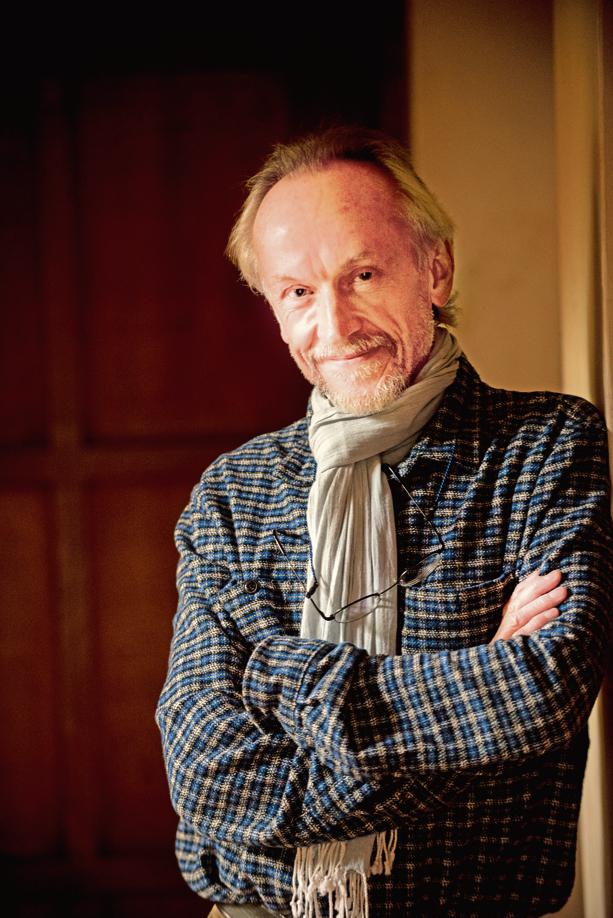
Jefford is one of the most famous wine writers and has earned multiple accolades over his long career. He lives in the south of France, is a Contributing Editor to Decanter magazine and also co-chairs the Decanter World Wine Awards. He also acts as academic advisor to The Wine Scholar Guild. Andrew received a Lifetime Achievement Award from the Institute of Masters of Wine in February 2026.
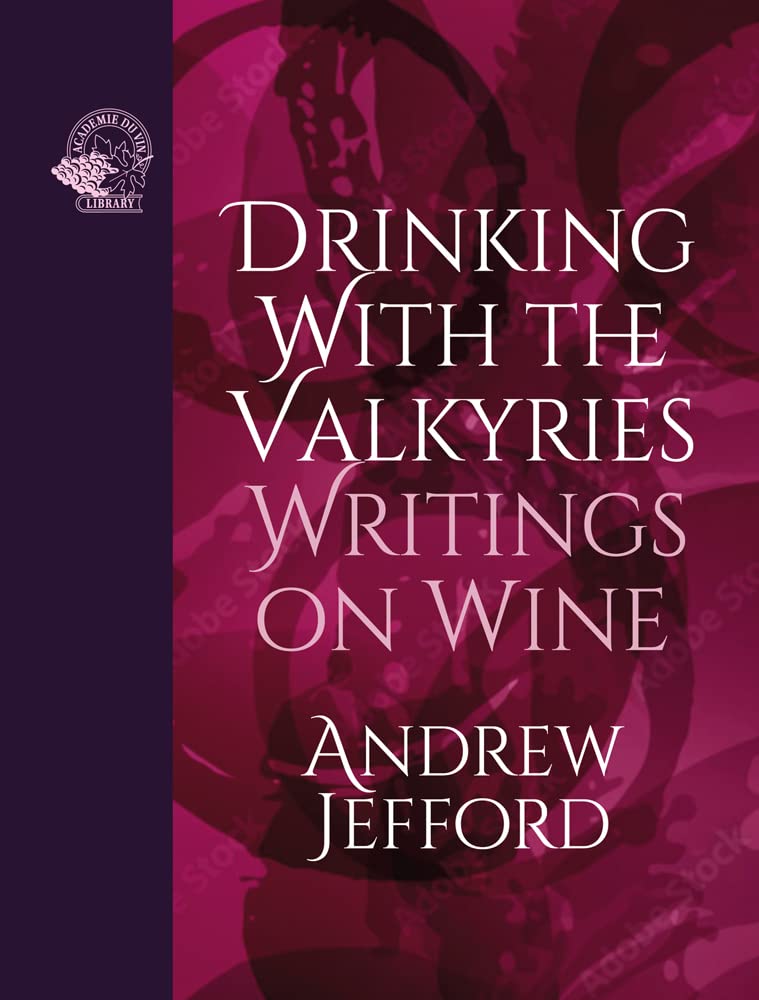
His Drinking with the Valkyries: writings on Wine, a collection of essays on wine published by Académie du Vin Library, is a delight that I delve into ever so often. The book is now a much-thumbed-through, dog-eared, multi-hued Post-It flagged book. (It is not the only book Jefford has written. His others include The New France among many others.)
In fact, I interviewed him (virtually) during the release of this book in 2023, and would like to highlight a few things he mentioned that are worth repeating. Wine writing presents a significant challenge due to the subject’s dense, data-heavy, and terminology-laden nature, he pointed out. To circumvent this complexity, writers can focus on the emotional aspects of the wine experience rather than purely intellectual concepts. And the masterful turn of phrase: “I love youth in wine, and everything that goes with it: the energy, the excitement, the flesh, the vivacity, the extravagance.” (In Praise of Young Wine). His description of the underrated Picpoul de Pinet: “Picpoul de Pinet is a quiet wine … limpid, sappy, fresh, like unaccompanied flute variations, or classical guitar fandanguillo, coming and going on the wind.” You get my drift.
I had written a longish, possibly too admiring a piece, which the editorial team, in their wisdom, had decided to cut and make concise. And my article on the book and his own writing journey was recast to focus on AI writing. Maybe in a way, the headline and new spin were prescient of the AI boom that was inevitably to follow.
Of course, AI is a highly proficient mimic. In fact, were you to ask Perplexity or Claude or ChatGPT to create a writing note in the style of Andrew Jefford, they would probably do a pretty neat job. But what AI undeniably lacks is human experience, the ability to feel sensory delight, to understand and appreciate how a wine tastes, how a vintage evolves and why some less-known bottles can taste more sensational at times than more famous wines.
Amanda Barnes MW, who looks after the UK-based Circle of Wine Writers’ periodical, the Circular, put it rather nicely: “I am worried writing drivel will become acceptable, and that unoriginal AI-generated content will win the battle, not because it is better than human work, but because readers will struggle to find us amongst the weeds.” (You can read her piece here).
Meanwhile, I do not think I could expound on the shortcomings of using AI to write or critique wine better than Jefford himself. “Those who say that all discussion of wine should be in ‘plain English’ are plain wrong. The results would be plain boring”
ICYMI, the Mint article based on my exchange with him, published in the Mint Lounge, is here in its entirety. (Andrew Jefford on modern wine writing in the face of the threat from AI.)
And for those craving more writing on wine and its environment, can follow @andrewjefford895649 on Substack.
PS: I know some of you are counting the em dashes, hyphenated words and two-word sentences in this piece. Please don’t. I can assure you it is all me, zero AI. And that’s the way I like to write. Of course, the banner image is AI-generated, courtesy of ChatGPT.
Drinking with the Valkyries: Writings on Wine by Andrew Jefford is available on Amazon and Academie du Vin Library.