• Home
  • Interviews
  • News & Views
  • Wine in India
  • Wine Society
  • Food and Wine
  • Winery Visits
  • Guest Column
  • Contact
  • Home
  • Interviews
  • News & Views
  • Wine in India
  • Spirits
  • Food & Wine
  • Winery Visits
  • Guest Column
  • Contact
  • March 25, 2026

    Michel Rolland’s India connection

  • February 8, 2026

    When the walls whisper of the terroir

  • October 9, 2025

    Glass Act: Shiva pours to win

  • July 15, 2025

    So, no/low drinks aren’t a no-no!

  • June 4, 2025

    ‘Canned and non-alcoholic sparkling wines are growing in popularity’

  • April 14, 2025

    Beyond the Barrel: Journey Through Burgundy’s Hidden Gems

  • February 21, 2025

    Emotional journeys & sensory mastery: BTS at the Best Sommelier of India 2025

  • February 21, 2025

    Best Sommelier of India: Meet the Final Five

  • November 5, 2024

    ‘Portuguese native grapes give the country the tools needed against climate change’

  • October 31, 2024

    Women in Wine Portugal: “The wine business is alll about relationships”

  • August 31, 2024

    A Master Sommelier’s story: Beaucastel & beyond

  • June 28, 2024

    Riesling Love: The passion of Dr Lippold

  • April 30, 2024

    Rosé: no longer just a happy summer sip

  • March 25, 2024

    The Gerard Basset Foundation: wine education scholarships for India

  • February 29, 2024

    Wine regions to visit in 2024

  • December 21, 2023

    48 hours of wine euphoria in Mumbai

Priorat Part 2: The stark land that makes opulent wines
July 31, 2019

Some of the regions top wine producers and their best wines are listed in this blog. Visit, or buy a bottle if you get the chance. It will be a worthy spend.

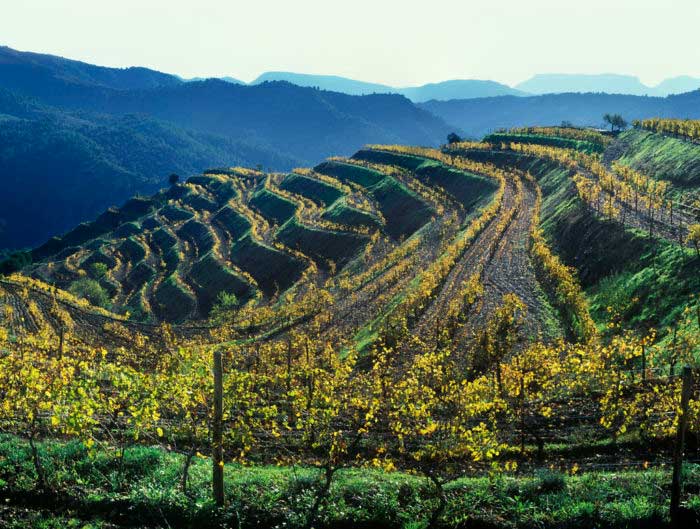
Just two hours drive from Barcelona, Priorat is a wine region like no other. Steep, stark with a unique terroir. The rapid strides made by the region in the last few decades is a testament to its award winning wines, worthy of ageing and critical appreciation. As pioneering producer René Barbier says, “We think we are on our way to become one of the references for exceptional wines and serious work.”

Clos Mogador

If the name sounds French it is because its owner René Barbier, is a French expat in Priorat, acknowledged as being one of the pioneers who triggered the Priorat resurgence in the 1990s along with Alvaro Palacios. Today, the Barbier family makes spectacular premium-only wines in the village of Gratallops.

Annual production: About 40,000  bottles

My picks:

Clos Mogador 2016: 50% Garnacha, 25% Carinena, 16% Syrah, 10% Cabernet Sauvignon. 30,000 bottles

  • The wine cellar at Clos Mogador
  • Wine tourism: visitors walk around the Clos Mogador vineyards.
    Main image: Clos Mogador

Manyetes 2015: 100% Cariñena. 4700 bottles.

Nelin 2016: Stunning white crianza, proves there is more to Priorat than its red wines. White Garnacha and Macabeo. 7000 bottles

Barbier explains: “Priorat managed to avoid the chemical aggression of the 60’s, when an aggressive expansive monoculture was mainstream.  Therefore, we kept a balanced flora and environment, and we managed to start planting again just at the time when the eco-friendly sensitivity started.   Priorat is an old region that missed the era of a disastrous, aggressive agriculture.  And it is indeed well-known among the wine specialists, as much as La Rioja.  Our movement in the 90’s meant that a lot of vineyards were replanted, that is why we have about 3/4 vines from those years, and only 1/4 are really old ones, some of them centenary.”

Although the resurgence has been credited with the foresight of the group (Ed: Occasionionally known as the Famous Five, the pioneers of the 1990s were Rene Barbier of Clos Mogador, Alvaro Palacios of Alvaro Palacios, Dafne Glorian of Clos Erasmus, Carles Pastrana of Clos Oba and Jose Luis Perez of Clos Martinet) dominated by outsiders, Barbier insists, “We know that we are nothing without the deep roots of the Priorat people.  We know that success also depends on competing in  quality, which is our driving force.”


Camí Manyetes, 43737-Gratallops Spain
Website: 
http://www.closmogador.com

Mas Doix

Mas Doix is a family run estate by Doix/Llagostera family known for its award-winning wines made in tiny quantities.

Says founder Valenti Llagostera, “In the 20th century, our grapes, mainly Garnacha, went to the cooperatives to make a rustic, high acid wine, with a lot of colour. It was used just to improve other wines… in Spain or outside Spain. With the arrival of Rene Barbier and Alvaro Palacios….our wines began to be made very differently, in a different style.We do have a very distinctive soil and terroir! Schist, dry climate, the Mediterranean sun…this means low yields and concentration. Mas Doix’ wines are full of  freshness and elegance.”

  • The founders of Mas Doix
  • Mas Doix wines

My picks:

1902 2015: Made of 100% old-vine Cariñena grapes – 110 years old. The vintages have topped 90+ points in reviews since 2009, the first vintage. 850 numbered bottles made.

Doix 2015: 55% old Cariñena (110 years old), 45% red Garnacha. Also gathering 90 + point scores for its vintages. 6000 bottles made.

Mas Doix also has a running and hiking route, and are noted for their annual Mas Doix race. (See website)

Mas Doix, Carrer Major, 56, 43376 Poboleda Spain. Website: http://www.masdoix.com/

Winery visit and tasting from €20  per person 

Clos Figueras

Another expat, Christopher Cannan joined the pioneers when he was persuaded by Barbier and Palacios to buy an abandoned vineyard near Gratallops which was up for sale in 1997. Today, Clos Figueras (“Clos”  because it consisted of 10 hectares all in one piece) wines are highly rated, and Cannan, who had his roots in the Bordeaux wine trade, is known for his excellent range. The vineyard covers about 11 hectares. The total size of the property is 18 hectares, including olive trees and forests. Like many Priorat producers, Clos Figueras produces its own olive oil and honey.

My picks:

  • Christopher Cannan with his daughter Anne-Josephine
  • The wines of Clos Figueras

Clos Figueres 85% Grenache and Cariñena (vines are approximately 30-60 years),10% Syrah 5% Mourvedre and Cabernet Sauvignon

 Font de la Figuera white wine : Viognier 60%, White Grenache 35%, Chenin Blanc 5%.

Total production about 38,000 bottles.

Clos Figueras, Carrer de la Font, 38, 
43737 Gratallops Spain. Website:
https://www.closfigueras.info/

Winery visit from €15 per person 

Clos Figueras runs a cosy restaurant Les Figueras, in Gratallops specialising in a menu created from local, organic produce. It also has a B&B, rooms from €99 onwards.

Cellar Burgos Porta

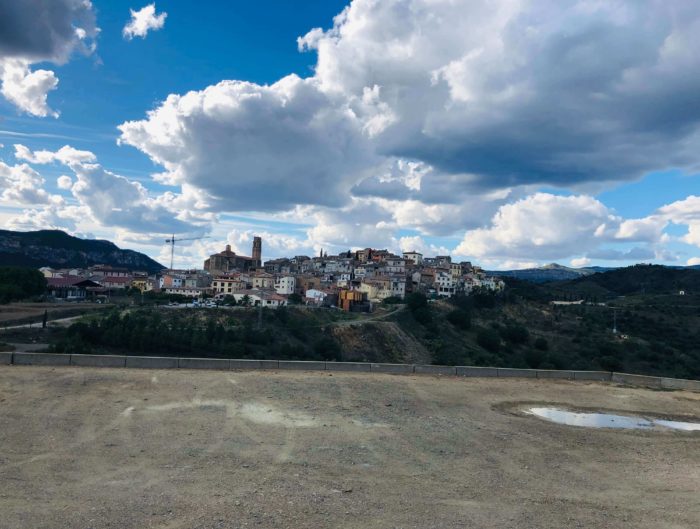
Mas Sinen is the name of the 15 hectares of organic vineyards and winery run by Poboleda native Salvador Burgos, a man of incredible energy and enthusiasm. Situated on a steep hillside outside the village, where only mules, not machines, work the land, Mas Sinen produces 4 wines, some from rare pre-phylloxera grapes which yield tiny quantities of juice. His friend, Sergi Mendez shows us around, explaining the mineral-rich content of the water that trickles down the hills through the llicorella soil is potable. (Indeed, we tasted the water – it was sweet and pure.) “We try to put our terroir into the bottle,” says Burgos. The yield is so tiny, that 2 vines yield no more than a glass of wine. The grey  stone-faced winery is small but old, boasting of basket-presses ranged alongside steel tanks. In the tasting room, we taste the 2018 Mas Sinen. It is still a baby, Burgos declares, “It will be ready in 2021, after 6 months in barrel.” Burgos’ wines are ageworthy, but he shrugs this away with “Yes, it can age. But wine is made to be enjoyed, and because Priorat production is so small, its wines are rarely aged. They are drunk very quickly.”

Watching Burgos whisk around the winery, darting up to the tasting room where visitors await, I comment that he doesn’t walk, he runs. “No, corrects Mendez,” He flies. Priorat demands energy. It is a tough land.”

  • Burgos Porta’s Mas Sinen in Poboleda village
  • Salvador Burgos shows us the pure, sweet water that runs through his vineyards
  • The llicorella soil of Priorat at Mas Sinen
  • Vineyards: Mas Sinen. Pics: Ruma Singh

My picks:

Mas Sinen 2010: 40 % Garnacha, 23% Cariñena, 17% Syrah, 20% Cabernet Sauvignon. 7000 bottles

Mas Sinen Coster 2012: 55% Garnacha, 45% Cariñena, 2100 bottles

Mas Sinen Blanc 2016: 100% Garnacha Blanc. 700 bottles

Mas Sinen, 43376 Poboleda, Spain. Website: http://massinen.com/

Winery visit and tasting from person: €12 per person

Priorat Facts

 La Rioja and Priorat are the only two wine producing areas in Spain which have the label of Denominación de Origen Cualificada, i.e., Qualified  Apellation of Origin. While Rioja is on the radar of wine tourists, Priorat is less so, making it a hidden delight for wine lovers looking for top-rated, elegant, award-winning wines in a quiet, little-explored zone.

Els Noms de la Terra or the Names of the Land

An ambitious classification project, the first of its kind in Spain.

First level: DOQ Priorat level

Second: Vi de Vila (village),  wines from Priorat’s 12 villages

Third: Paratge wines – quality wines from specific areas.

Top classifications: Vinya Classificada – bottlings from exceptional single vineyards – and Gran vinya classificada.

Unique: The rare Velles Vinyes category for ancient vines over 75 years.

The Consell Regulador DOQ Priorat has identified each vineyard and plot in an effort to give provenance to every bottle of Priorat wine. This will give authenticity and value to the already-high value Priorat wines.

There are many more excellent producers in Priorat, both big and small making award-winning wines. This article represents just a few of the ones I had the chance to visit or interact with and are known by reputation. 

Visitors will find a wealth of excellent wine from the producers of Priorat. For details on visiting Priorat and things to do, see the Priorat Tourism website
www.turismepriorat.org

Share
Read More
No Comment

Tastings


Priorat: touched by divinity -I
July 17, 2019

Read More
No Comment

Bordeaux wine with Indian food, anyone?
June 30, 2019

Read More
No Comment

Gamaret to Divico: Swiss wine rules at home
June 6, 2019

Read More
No Comment

‘We are seeing startling changes in wines from Argentina’
April 30, 2019

Read More
No Comment

Under the southern stars: Argentina’s Chakana story
April 24, 2019

Read More
No Comment

Argentina celebrates the new Malbec
April 19, 2019

Read More
No Comment

The foresight of Francois Perrin
March 25, 2019

Read More
No Comment

Newer Posts Older Posts

  • About Ruma

    About Ruma Singh

    After over a decade as a journalist with one of India’s top newspaper groups in New Delhi and then Bangalore.. Read More

  • Latest News

    Can emerging markets for wine and spirits save the day? (Yes, we can!)
    90,000 visitors at Vinitaly 2026
    Forbes Wine: a new content vertical to launch
    Read More News
  • See Events Diary
  • Ruma’s articles in other media

    Reading News Paper

    A selection of articles by Ruma which have appeared in other publications..

    Read More
  • Subscribe To
    My Free Newsletter


  • Listed #69 Among the World's
    Top 100 Wine Websites.

    Feed spot
  • Follow Ruma Singh on Instagram


    Follow Ruma on Instagram

  • Italian Wine Podcast

    Harshal Shah and Ruma Singh DipWSET

    Italian Wine Podcast
  • Wine Expo 2023
  • Facebook

  • Free Subscription


  • Latest Posts

    • Michel Rolland’s India connection
    • When the walls whisper of the terroir
    • Glass Act: Shiva pours to win
    • So, no/low drinks aren’t a no-no!
    • ‘Canned and non-alcoholic sparkling wines are growing in popularity’
    • Beyond the Barrel: Journey Through Burgundy’s Hidden Gems
    • Emotional journeys & sensory mastery: BTS at the Best Sommelier of India 2025
    • Best Sommelier of India: Meet the Final Five
  • Popular Posts

    Popular Posts

    • ‘Tis the season for...
    • Read, say, love WINE: win...
    • Fratelli’s SETTE: The mag...
    • Beyond the Barrel: Journe...

Copyright © rumasingh.com | Media | Sitemap | Login