• Home
  • Interviews
  • News & Views
  • Wine in India
  • Wine Society
  • Food and Wine
  • Winery Visits
  • Guest Column
  • Contact
  • Home
  • Interviews
  • News & Views
  • Wine in India
  • Spirits
  • Food & Wine
  • Winery Visits
  • Guest Column
  • Contact

The foresight of Francois Perrin

March 25, 2019
Optimized Perrin  les vignes 3 jpg 11462

Steps to combat climate change in the vineyards: the scion of Châteauneuf-du-Pape’s Chateau de Beaucastel, Francois Perrin talks of the need to nurture the earth before it is too late

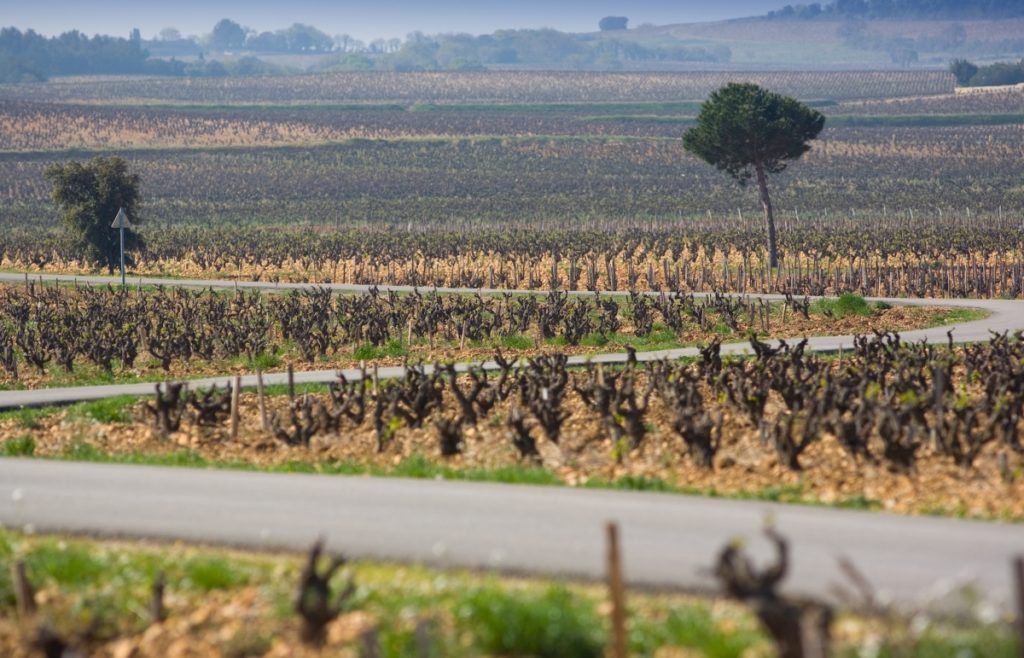
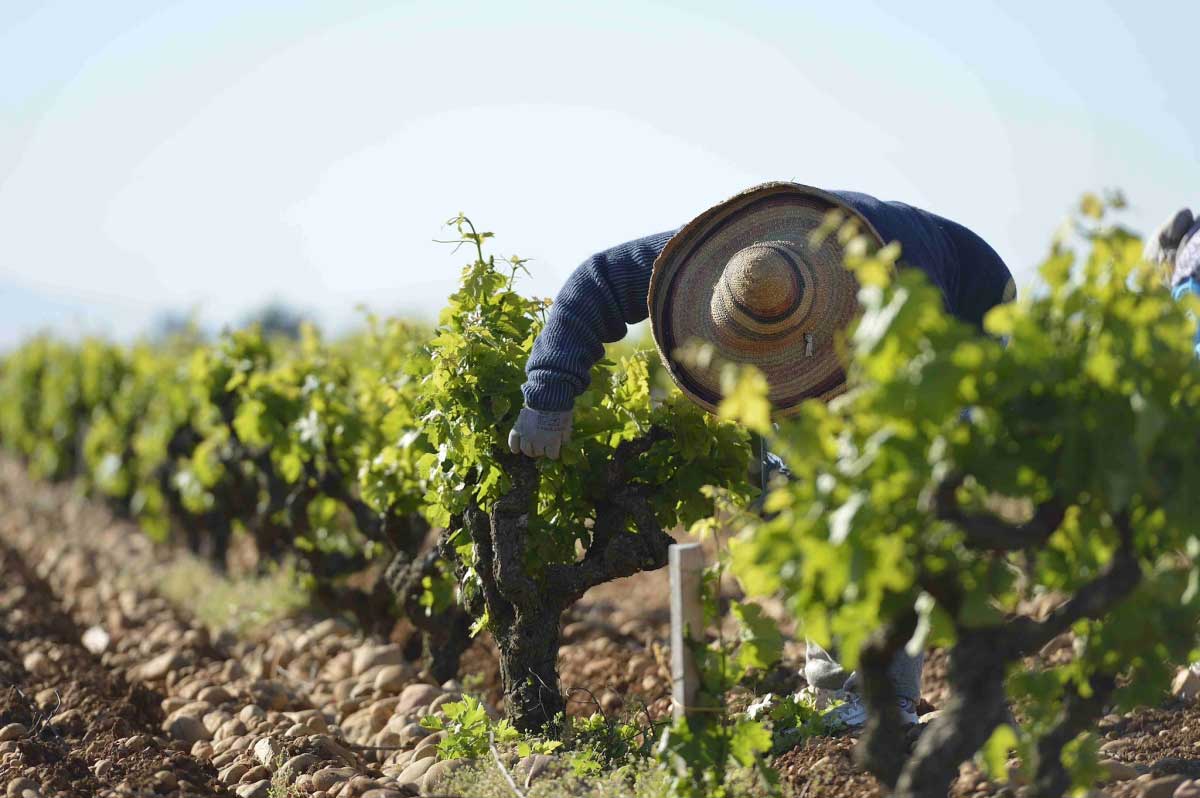
The vineyards of Château de Beaucastel are spectacular, even breathtaking. In a universe full of beautiful lush vineyards, Beaucastel stands apart by its sheer starkness. The gnarled vines, like stunted manikins in a row, are unlike any other. The gobelet-style head-trained vines draw from ancient Roman viticultural practices and while they may not be lush green and prolific, are perfectly suited to the terroir of Châteauneuf-du-Pape. In fact, Beaucastel is one of the few producers in the region to grow all 13 ( technically counted as 18 now that Blanc, Rouge, and Gris are counted separately) varieties that Châteauneuf-du-Pape is permitted to incorporate into its complex blend. The galets, the round, smooth stones peculiar to the region’s topography, absorb the heat of the sun during the day and radiate it at night back to the vines. The gobelet vines grow low, close to the earth and absorbing the warmth. The soil, a mix of sandstone, clay, limestone and marl, cause the the vines’ roots to dig deep into the earth in search of nutrition.
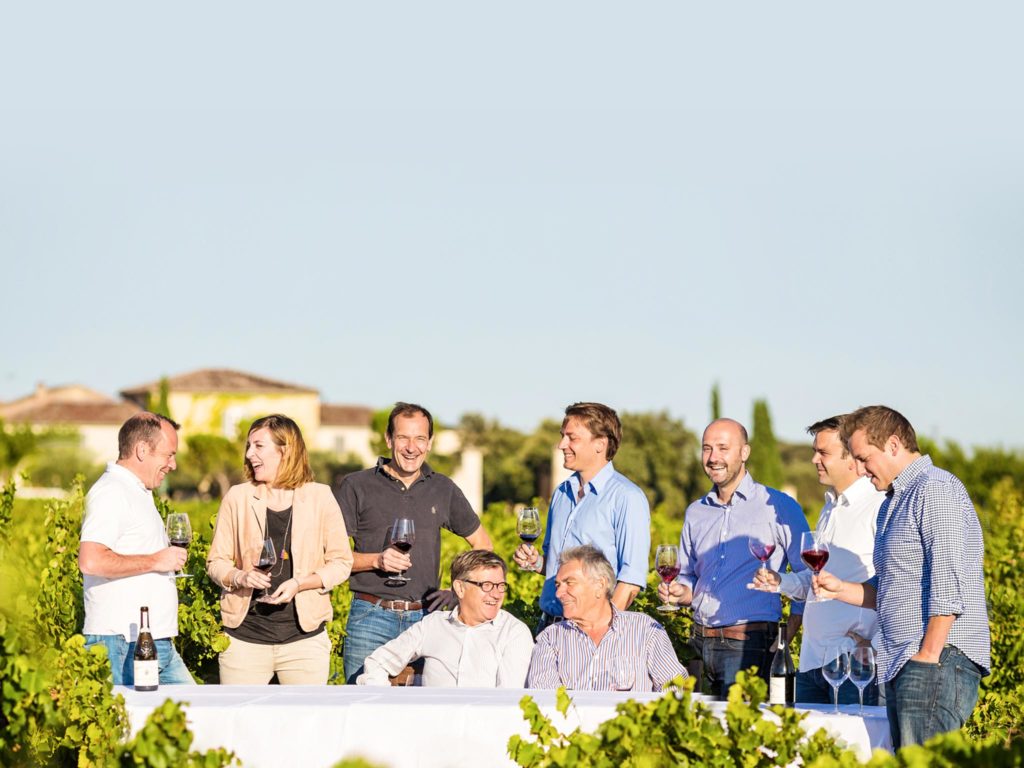
Members of Famille Perrin

All this creates for a very unique and complex terroir, and this is what gives the wines their special character. Grenache, the regions most widely-grown grape, never dominates the wines of Beaucastel, nor does oak. No wonder then, the balance they achieve year on year has got them 100 points from RP for their top cuvée , Hommage à Jacques Perrin, which I was privileged to taste sitting in the cellars of Beaucastel.

Beaucastel, while established in 1549 by Pierre de Beaucastel, has been with the Perrin family for five generations. And while the family name has been popularly associated with celebrity winemaking ( Château Miraval, belonging to Brad Pitt and Angelina Jolie) this is where their strength lies: the elegant and balanced wines which make them one of Châteauneuf-du-Pape’s most famous names.

The vineyards at Beaucastel

No surprise then to know that with the growing clamour and alarm over the effects of climate change, the Famille Perrin as they are known to have been quietly several steps, indeed decades, ahead with their vineyards, going organic in 1950, and biodynamic in 1974.

No better person to talk with perspective and widom on climate change than a member of the family – Francois Perrin, who helms the Perrin properities with his brother  Jean-Pierre.

Excerpts:

 With the terroir-driven wines you make, and your long-standingrecognition of the importance of organic viticulture, is there any learning to be conveyed to other producers on climate change? I ask.

“Everyone has to adapt to their own region and its specificities. Beaucastel has incorporated climate change into its philosophy and strategy a long time ago. We are based in a hot region and know this well,” he replies.

The first change that we integrated was around the grape varieties themselves. The AOC authorizes 13 different grape varieties and over the years we have increased our plantation with varieties such as Mourvèdre, Counoise and Muscardin that are late maturation varieties and therefore are more adapted to the warmer climate. Also, we use rootstock which is resistant to drought such as 110 Richter.” (110R is a rootstock which is drought-resistant -Ed).
“Furthermore, the appellation requires us to prune in the Gobelet method. This system is very resistant to drought because the leaf area per hectare is relatively low which limits the loss of water by transpiration. 

“Secondly, we have been experimenting and testing the results on whole bunch vinifications with vatting of the stalks. The stalks allow us to reduce the alcohol potential by 0.2° to 0.5 °.

“Thirdly, we have been carrying out trials and comparing the alcoholic potential on vines where we have thinned the leaves, not thinned the leaves and vines that we have topped. If we decrease the quantity of leaves, we also decrease the alcoholic maturity but unfortunately, we also decrease the phenolic maturity. We are trying to find a balance to reduce alcoholic maturity without affecting the phenolic maturity. These are what our future studies will be based on.”

But the Perrins are a step ahead in this matter, too.

A secondary issue with climate change is the wines tend to be very high in alcohol, low in acidity. A problem Chateauneuf-du-Pape faces being in a very warm Mediterranean climate.”

“We are working on clay spraying to reduce photosynthesis and therefore alcohol,” says Perrin, “So we have a long way to go to try to reduce the alcoholic potential, which has been increasing over the past twenty years. However, since the early 2000 vintages, our wines have never been so good…”
“We do not know the future, and we are concerned for our existing vineyards. For our future vineyards, we are investing in vineyards that have more altitude. 100 meters above sea level is equal to 100km north.

“All these studies are shared with our group PFV (Primum Familiae Vini) and we exchange regularly on this matter and the specificities of each of our regions.”

The impact of climate change is the major subject for Vinexpo Bordeaux 2019. A discussion on the topic will be held on 14 May 2019, at 12 noon in Salle 8 Hall 2.

Share
alcoholbiodynamicchateauChateauneuf-du-Papeclimate changeCounoisegaletgobeletgrapeGrenacheorganicPFVrootstockvarietiesvinesVineyardsvintage
Share

Tastings

You might also like

Wine regions to visit in 2024
February 29, 2024
Climate crisis: ‘We must stop the madness that will make our earth uninhabitable’- Torres
November 25, 2021
Rosé: A lighter shade of pale
August 30, 2020
  • About Ruma

    About Ruma Singh

    After over a decade as a journalist with one of India’s top newspaper groups in New Delhi and then Bangalore.. Read More

  • Latest News

    Bordeaux’s €20m fund to tackle vineyard crisis
    A New Chapter at WSET
    ‘Wine is the third character in the series’: Wine consultant Sébastien Pradal on shaping Drops of God
    Read More News
  • See Event Diary
  • Ruma’s articles in other media

    Reading News Paper

    A selection of articles by Ruma which have appeared in other publications..

    Read More
  • Subscribe To
    My Free Newsletter


  • Listed #69 Among the World's
    Top 100 Wine Websites.

  • Follow Ruma Singh on Instagram


    Follow Ruma on Instagram

  • Italian Wine Podcast

    Harshal Shah and Ruma Singh DipWSET

  • Wine Expo 2023
  • Facebook


  • Free Subscription


  • Latest Posts

    • The Judgement of Paris: the legacy continues…
    • Inside Vinitaly: Secci & the Shifts Shaping Wine
    • Michel Rolland’s India connection
    • When the walls whisper of the terroir
    • Glass Act: Shiva pours to win
    • So, no/low drinks aren’t a no-no!
    • ‘Canned and non-alcoholic sparkling wines are growing in popularity’
    • Beyond the Barrel: Journey Through Burgundy’s Hidden Gems
  • Popular Posts

    Popular Posts

    • The Judgement of Paris: t...
    • The Marchesi di Barolo ta...
    • India Wine Awards 2019: I...
    • Fratelli’s new passion ha...

Copyright © rumasingh.com | Media | Sitemap | Login